The ultimate guide to sprouts
30. January 2026
What makes sprouts so nutritious?
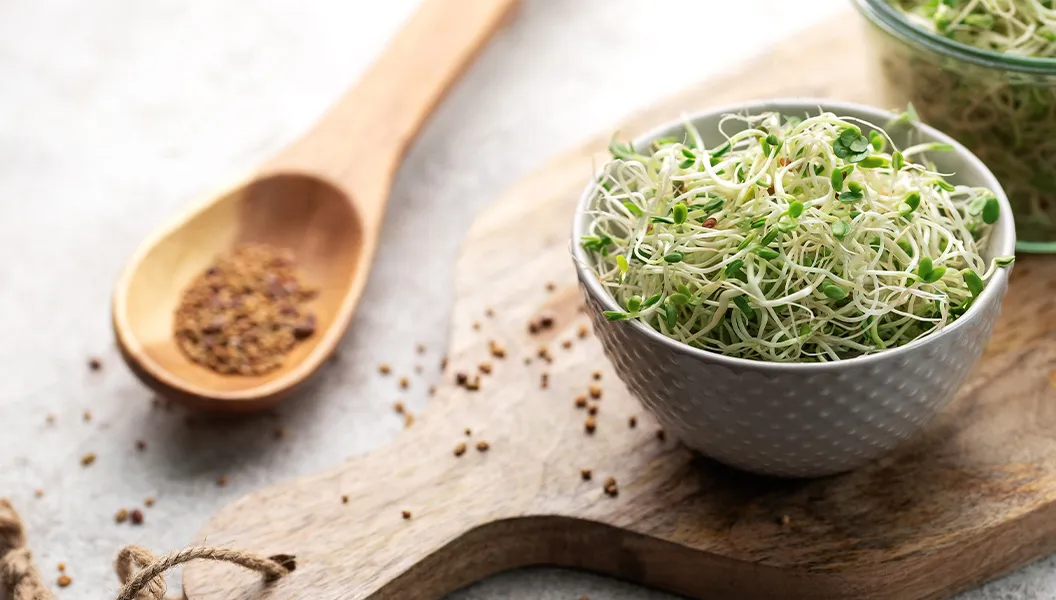
Sprouts are little nutrient wonders. Sprouts form when seeds, pulses or grains begin to germinate—and at this stage they’re packed with vitamins, minerals and enzymes. Each sprout contains everything the young plant needs to thrive: vitamins B1, B2, C, E and K, along with calcium, magnesium, iron, zinc and antioxidants. They’re also high in fibre. The exact mix naturally varies depending on the type of sprout.
All this goodness benefits us, too. Whether added as a crunchy ingredient in a salad or as a topping on a bowl, these delicate shoots bring variety to everyday cooking and support a balanced diet. Their fresh, crisp bite pairs naturally with deeper flavours such as umami—which is why Kikkoman Soy Sauce or one of our teriyaki sauces works so well with them.
Different sprout varieties

Sprouts come in many varieties. What sets them apart? Here are the most popular ones.
Cress
Garden cress is particularly popular and easy to grow at home, sprouting quickly with a peppery, aromatic flavour. Ideal for salads, egg dishes or on bread.
Alfalfa sprouts
Mild with a gentle nuttiness, alfalfa sprouts are perfect for salads, sandwiches or smoothies. They also contain valuable bitter compounds.
Radish sprouts
These deliciously spicy sprouts already have the slightly hot flavour of radishes. They’re especially nutrient-rich and rank highly for antioxidants among the sprout family.
Soybean and mung bean sprouts
These two varieties are often confused. What's sold fresh in Asian supermarkets is usually mung bean sprouts, not soybean sprouts. They're lighter, crisper and larger than most other types, suitable raw in bowls or briefly stir-fried in wok dishes. Soybean sprouts, whether fresh or jarred, are used in stir-fries and soups but must be cooked before eating because they contain lectins.
Broccoli sprouts
Juicy and crisp with a mild, peppery note, broccoli sprouts make an excellent topping for salads and soups. They’re also a natural source of mustard oil.
Brussels sprouts
If you’re wondering what Brussels sprouts have to do with sprouts: the green buds are actually small leaf-axil shoots growing along the stem. Unlike the sprout types above, however, they’re cooked and eaten as a vegetable.
The best sprout recipes for home cooks

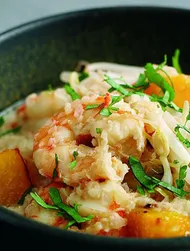
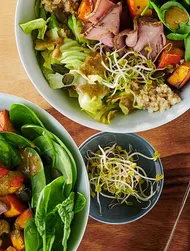
Whatever dish you’re making, Kikkoman Soy Sauce adds a rich umami note that pairs perfectly with the fresh crunch of sprouts. Just a splash is enough to bring out the best in your sprout dishes. Here are a few recipe ideas:
![[Translate to Englisch (UK):]](https://www.kikkoman.co.uk/fileadmin/_processed_/7/5/csm_1389_Kikko-festive-main-recipe-desktop-1596x695_2d7b033f90.webp "[Translate to Englisch (UK):]")






Growing your own sprouts—here’s how
Fresh sprouts can be grown at home all year round—on a windowsill or in the garden.
Cultivation, care and harvesting
- Prepare the seeds: soak them in water for a few hours.
- Choose a sprouting vessel: sprouting jars with mesh lids are ideal, but trays also work well. Good ventilation and drainage are important. (Cress can also be grown on damp kitchen paper, which you might remember from childhood.)
- Watering: rinse the sprouts daily with fresh water and allow them to drain thoroughly. Avoid standing water, as it can lead to mould.
- Harvesting: depending on the variety, sprouts are ready to harvest after 4–7 days, when the shoots are about 2–5 cm long and have developed their typical aroma.
Ideal growing conditions
- Indoors: a bright spot without direct sunlight, at a room temperature between 18 and 22 °C.
- Outdoors: in summer, you can grow them on a balcony or terrace, but keep them protected from heat and rain.
Step by step to perfectly cooked Brussels sprouts
- Remove any wilted leaves and trim the stalk
- Halve larger sprouts so they cook evenly
- Cook in boiling salted water (or stock) for 8–10 minutes until firm to the bite, or 12–15 minutes for a softer texture
- Drain and briefly rinse in cold water